Simulation:
Simulation means the operation of a model in terms of time or space, which helps analyze the performance of an existing or proposed system. In other words, simulation is the process of using a model to study the performance of a system. It is an act of using a model for simulation.
Modeling:
Modeling is representing a model, including its construction and working. This model is similar to an original system, which helps the analyst predict the effect of changes on the system. In other words, modeling is creating a model representing a system, including its properties. It is an act of building a model.
Why do we do simulation?
- When the system is too complex: We do simulation…….
- Safety Critical System: Some systems are related to human health, or some systems may have harmful caution for human beings. So, we do simulation.
What do we have to know?
- Programming Ability
- Statistics and Probability Knowledge
- Mathematics
Areas of Application
- Manufacturing application: Industry, plan, raw materials, etc.
- Construction or Civil Engineering: Building model, Bridge Model, etc.
- Military Application: UAV/AUAV, Underwater life research, Submarine, Missiles, Atomic solutions, War scenarios, etc.
- Logistics, Transportation & Distribution: Amazon Drone delivery, Home Delivery
- Business Process or Plan: Banking sector, Startup Business
- Human System: Air Traffic Control, Traffic Control System, Traffic Signal, etc.
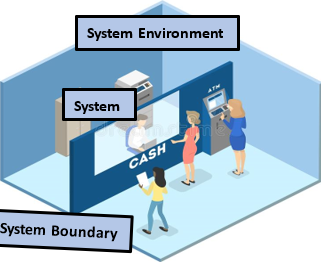
System
A system is a group of objects joined together in regular interaction or independent towards accomplishing some purpose.
Example:
For a Bank: Cash Counter is a System
System Changes:
There are two types of system change.
- External Change: When the system change occurs in the system environment. (**If there is no change from the environment to the system, we may not consider the system environment.)
- Internal Change: When the system change occurs by the system's internal objects.
Component of a System
Entity: An entity is an object of interest in the system. E.g. Customer in the bank
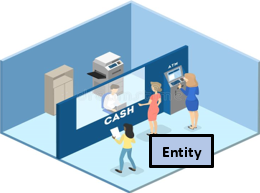
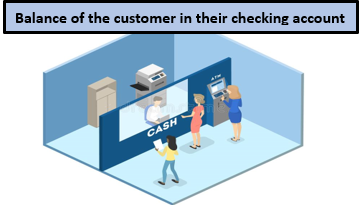
Attribute: A property of an entity.
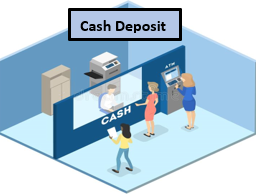
Activity: Activity represents a period of a specified length.
State: A state of a system is defined to be the collection of variables necessary to describe a system at any time, relative to the objectives of the study
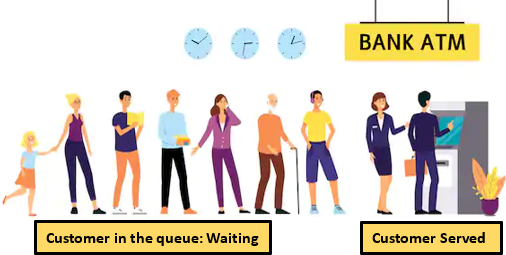
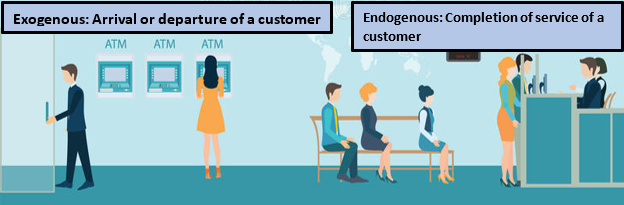
Event: An event is an instantaneous occurrence that may change the state of the system.
- Endogenous: occurring within the system
- Exogenous: activities and events in the environment that affects the system
Types of System
Discrete System
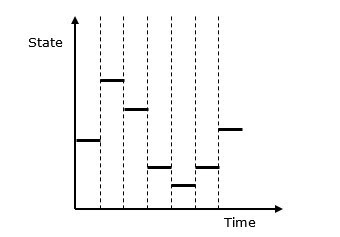
A discrete system undergoes abrupt state changes at discrete moments in time. Most systems encountered in operations research and management science (communication or transportation studies) are discrete. A simulation model includes a physical model as well as a logic model.
Continuous System
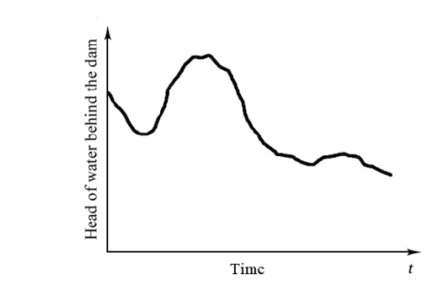
Continuous systems are those in which the input and output signals are the same at both ends. Variables in this system fluctuate with time, and there is no variance between the input and output signals. A continuous system provides an output signal in response to an input signal. The state variables change continuously over time.