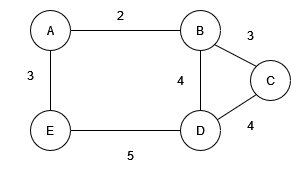
What is a Spanning Tree?
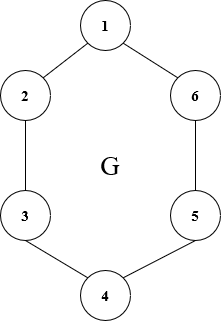
Assume there is an undirected and connected graph G(V, E) with a spanning tree. G is a subgraph of G that is a tree that spans G (that is, it includes every vertex of G) (every edge in the tree belongs to G )
Here,
G = (V, E)
V = {1, 2, 3, 4, 5, 6}
E = {(1, 2), (2, 3), (3, 4), (4, 5), (5, 6), (6, 1)}
- A spanning tree is a subgraph of a graph
- We should take all the vertices from the graph
- There will be no cycle or cyclic graph in the Spanning tree.
no of adjacent in the graph G is |V|= 6, in the spanning tree we will have total |V| - 1 = 6 - 1 = 5 adjacent. So, we have to know how many spanning trees can be generated from a graph.
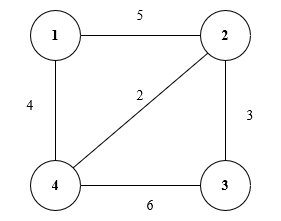
Let this graph G has four vertices.
V = {1, 2, 3, 4}
E = {(1, 2), (1, 4), (2, 4), (4, 3), (3, 2)}
Let's find out the possible spanning trees for G.
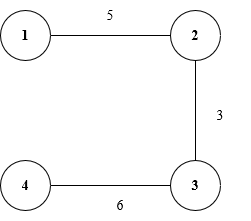
Cost= 14
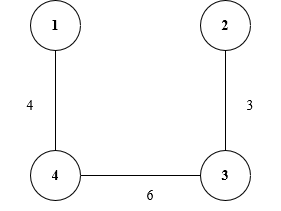
Cost= 13
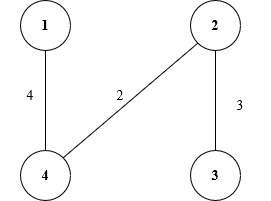
Cost= 9
Can we have a minimum cost-spanning tree?
YES! We have the greedy method to solve the optimization problems.
We have two Algorithms for finding out the minimum cost-spanning tree.
- Prim's Algorithm
- Kruskal Algorithm
Prim's Algorithm
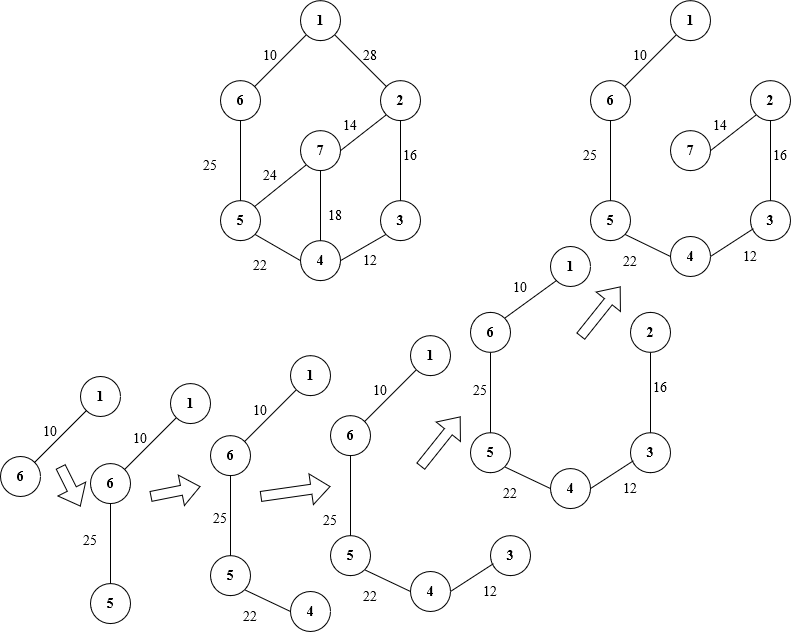
Total Cost = 10 + 25 + 22 + 12 + 15 + 14= 99
Kruskal Algorithm
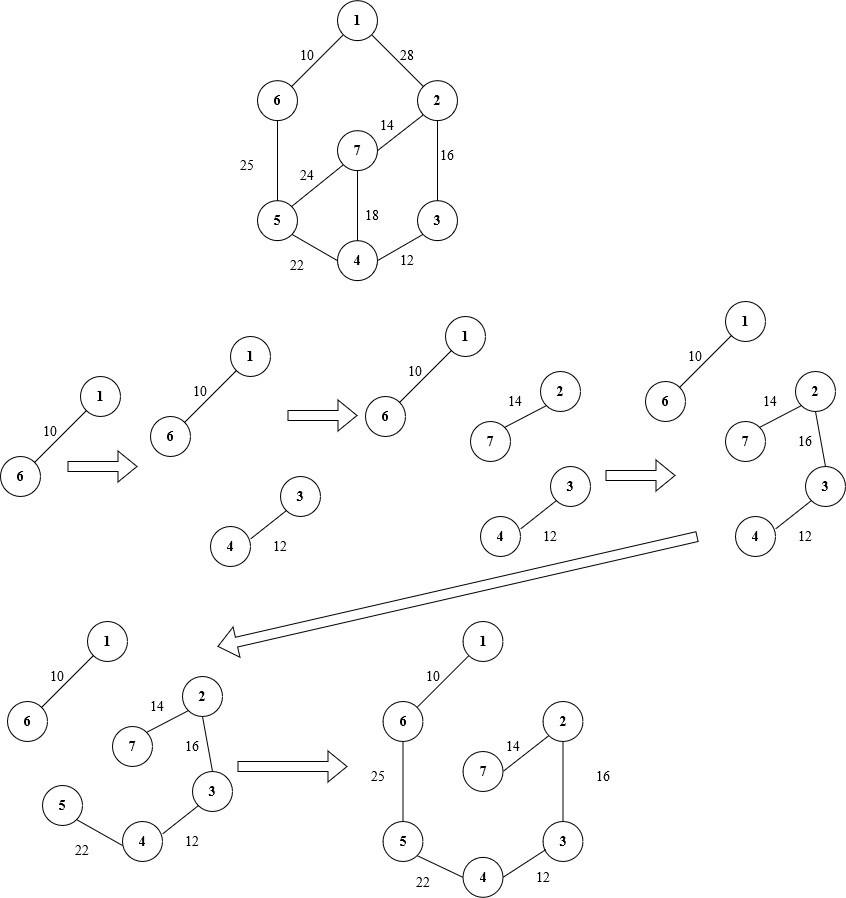
Total Cost = 10 + 25 + 22 + 12 + 15 + 14= 99
Do it yourself